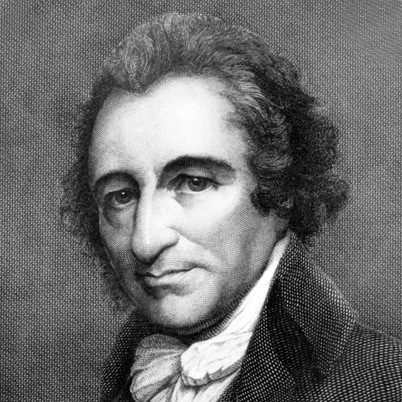
The Age of Reason
Teddy Roosevelt called him a dirty little atheist. He was describing the man who made Teddy Roosevelt possible.
The Famous Speech
In 1910, Theodore Roosevelt delivered one of the most quoted speeches in American history. You have probably seen it on motivational posters, in locker rooms, on LinkedIn. It goes like this:
A great speech. Genuinely. Roosevelt deserves credit for it. He was a man of action and he meant every word.
But here's the problem. About fifteen years before he gave that speech, Roosevelt had this to say about the man who best embodied every single word of it:
"a filthy little atheist"
— Theodore Roosevelt, 1888Three words. Filthy. Little. Atheist.
That's what Teddy Roosevelt thought of Thomas Paine. The man who wrote Common Sense. The man who saved the Revolution. The man who was, by every measure Teddy Roosevelt himself would later define, the most genuine man in the arena in the history of this country.
The irony is almost too much to take.
The Real Record
Let's go through Roosevelt's own criteria. One by one. And ask who actually fits.
Paine didn't just write about the Revolution. He enlisted in Washington's army as a volunteer aide-de-camp. He marched with the troops. He was there at the lowest moment, when everything was falling apart and Washington's men were starving and ready to quit. He didn't watch from a distance. He was in it.
Paine failed constantly by conventional standards. He died broke. He was mocked, exiled, and forgotten by the country he helped create. He was arrested in France and came within hours of execution. He kept going anyway. He never stopped writing, never stopped arguing, never stopped pushing. That is striving valiantly.
Paine gave away the royalties from Common Sense to fund the Continental Army. He had nothing when he died. No estate, no legacy of wealth, no comfortable retirement. He spent everything, literally, on the cause of human freedom. Jefferson had Monticello. Franklin had his legacy. Paine had a small plot in New Rochelle and a coffin that barely anybody showed up to.
In France, Paine spoke out against the execution of King Louis XVI. This was not a safe position. He was thrown in prison by Robespierre and spent nearly a year in Luxembourg Prison waiting to find out if he would be guillotined. He was saved by luck and timing, not by influence or friends in high places. He had none. He dared greatly and nearly paid for it with his life.
While the other founders were calculating their reputations, hedging their positions and building their legacies, Paine was burning his down for the truth. He attacked organized religion when that was genuinely dangerous. He argued against slavery when that was genuinely unpopular. He told people things they didn't want to hear because they needed to hear them. Cold and timid? He was the opposite of cold and timid.
The Verdict
Think about what Roosevelt was able to do. He became president of a country that existed. He charged up hills in a war that a functioning republic could afford to fight. He spoke from a bully pulpit that someone had built for him. He stood on ground that had been cleared, generation by generation, starting with the men and women who decided to break from Britain in the first place.
Who made that decision feel possible? Who wrote the words that turned colonial grievance into revolutionary conviction? Who stood in front of a freezing, starving army at Valley Forge and gave them something to believe in with a pamphlet that started with the words: These are the times that try men's souls?
Roosevelt gave a speech about the man in the arena. He had no idea he was describing the man he had spent his career dismissing.
He didn't just talk about sacrifice. He sacrificed. He didn't just talk about courage. He was courageous when it cost him everything. He didn't just talk about speaking truth to power. He spoke truth to power in three countries, on two continents, across five decades, and he paid for it every single time.
His face was marred by dust and sweat and blood. He spent himself completely in a worthy cause. He failed while daring greatly, over and over again, and he never stopped.
His name was Thomas Paine. And he was the real man in the arena.
He wrote those words while marching with Washington's retreating army in the dead of winter. On a drumhead, by firelight. That is what the man in the arena actually looks like.