The Age of Reason

Great Americans

What the history books left out — the freethinkers, deists, and skeptics who built this nation, carried its torch, and paid the price for thinking freely. These men were great not despite their rejection of institutional authority, but because of it.

The Founding Argument

America Was Born of the Age of Reason

There is a story told about the founding of America — that it was built on Christian values, by Christian men, for a Christian nation. It is a story told so often, so loudly, and by so many institutions with so much to gain, that it has nearly obscured the truth.

The truth is this: the men who designed this republic were overwhelmingly freethinkers, deists, and skeptics. They did not build the separation of church and state by accident. They built it with great deliberateness, because they had seen — and in some cases fled — what happens when religious institutions seize political power.

"The United States was not founded as a Christian nation. It was founded as an Enlightenment nation — one where reason, not revelation, would be the basis of law, liberty, and the pursuit of truth."

Thomas Paine wrote the words that ignited the Revolution. Thomas Jefferson drafted the Declaration. Benjamin Franklin shaped the Constitution. James Madison erected the wall between church and state. None of them were orthodox Christians. All were deeply influenced by the Enlightenment principle that the individual, reasoning mind is sovereign.

But not all of them lived up to their own ideals. This page does not flinch from that truth. We honor what these men got right — and we hold them accountable for what they got wrong. Because the whole point of reason is that it applies to everyone. Including the founders.

Why You Haven't Heard This

Thomas Paine has almost no influence on present-day thinking in the United States because he is unknown to the average citizen. His teachings have been debarred from schools everywhere, and his views misrepresented until his memory is hidden in shadows.

The same pattern repeats throughout history. When a great mind challenges the authority of institutions — church, government, or academia — those institutions work to diminish that mind's legacy. It happened to Paine. It happened to Edison. It has happened to every thinker on this page to varying degrees.

The Age of Reason exists to restore these legacies — and to carry their ideas forward.

The Founding Freethinkers

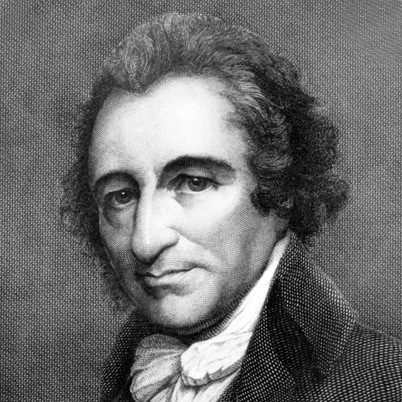
Thomas Paine
THOMAS PAINE · 1737–1809

Thomas Paine — The Idealist

No single person did more to make America possible than Thomas Paine. His pamphlet Common Sense transformed a colonial grievance into a revolutionary conviction. While the other founders were still hedging their bets — playing politics, calculating personal interest, still trying to negotiate with the mother country — Paine wrote words so clear and so morally undeniable that he forced their hand. He made independence inevitable.

"These are the times that try men's souls."

Then came The Crisis — written when Washington's army was starving and on the verge of collapse. Paine didn't write to the generals. He wrote to the soldiers. To the desperate. And those words held the Revolution together when everything else was failing.

Unlike every other name on this page, Paine requires no asterisk. He never owned slaves. He saw from the very beginning that all men being created equal meant exactly that — all men. He was right about independence, right about equality, right about reason, right about religion. He was right about everything. And they buried him for it.

"My own mind is my own church."
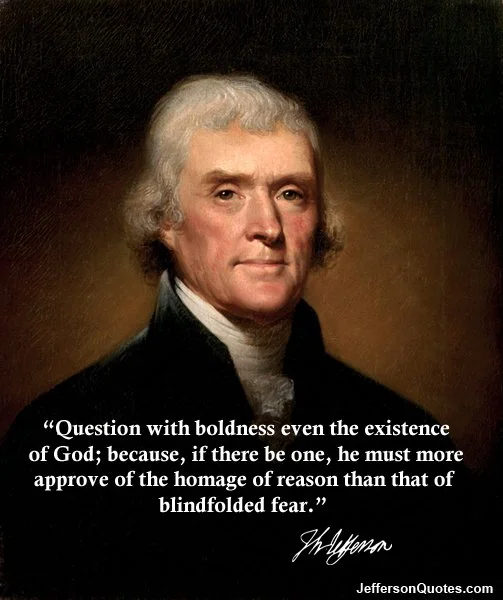
Thomas Jefferson
THOMAS JEFFERSON · 1743–1826

Thomas Jefferson — The Architect

Jefferson's contributions to the founding of this nation are undeniable. His words in the Declaration of Independence — that all men are created equal, endowed with certain unalienable rights — remain among the most powerful ever written about human liberty. His deism, his Jefferson Bible, his lifelong commitment to the separation of church and state — these place him firmly in the Enlightenment tradition.

"Question with boldness even the existence of God; because, if there be one, he must more approve of the homage of reason, than that of blindfolded fear."

But Jefferson's legacy in the Age of Reason is tarnished — not by his religious views, but by his moral failure on the most fundamental question of his era.

A Note on Jefferson's Moral Failure

Jefferson enslaved over 600 human beings in his lifetime. He fathered children with Sally Hemings, an enslaved woman who could not consent. He wrote "all men are created equal" while building his wealth and comfort on the suffering of people he refused to free. Thomas Paine — the man Jefferson called a friend — saw clearly that slavery was wrong from the very beginning. Jefferson had access to the same moral clarity. He chose not to use it. We honor Jefferson's contributions to Enlightenment philosophy while refusing to excuse or minimize this fundamental hypocrisy.

"I have sworn upon the altar of God eternal hostility against every form of tyranny over the mind of man."
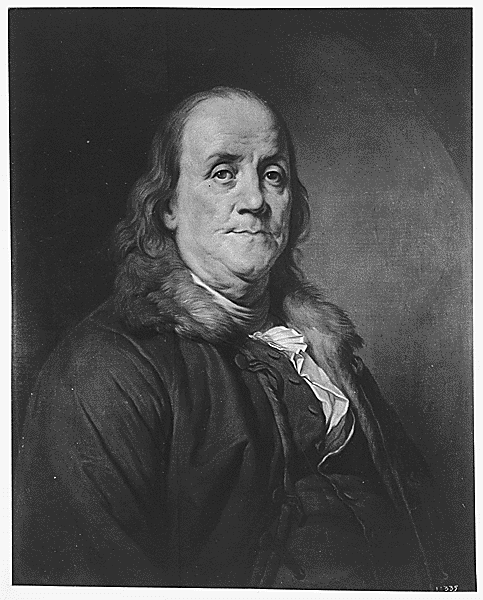
Benjamin Franklin
BENJAMIN FRANKLIN · 1706–1790

Benjamin Franklin — The Pragmatist

Franklin never joined a church. He believed in a Creator discovered through observation, experiment, and reason — not through faith or scripture. It was Franklin who recognized Thomas Paine's genius in London and gave him the letters of introduction that brought him to America. Without Franklin, there is no Paine in America. Without Paine, the Revolution may never have caught fire.

"The way to see by faith is to shut the eye of reason."

It is worth noting that Franklin, unlike Jefferson and Washington, did ultimately act on his moral convictions regarding slavery — he became president of the Pennsylvania Abolition Society in his final years and petitioned Congress to end slavery. He moved slowly, but he moved.

"Lighthouses are more useful than churches."
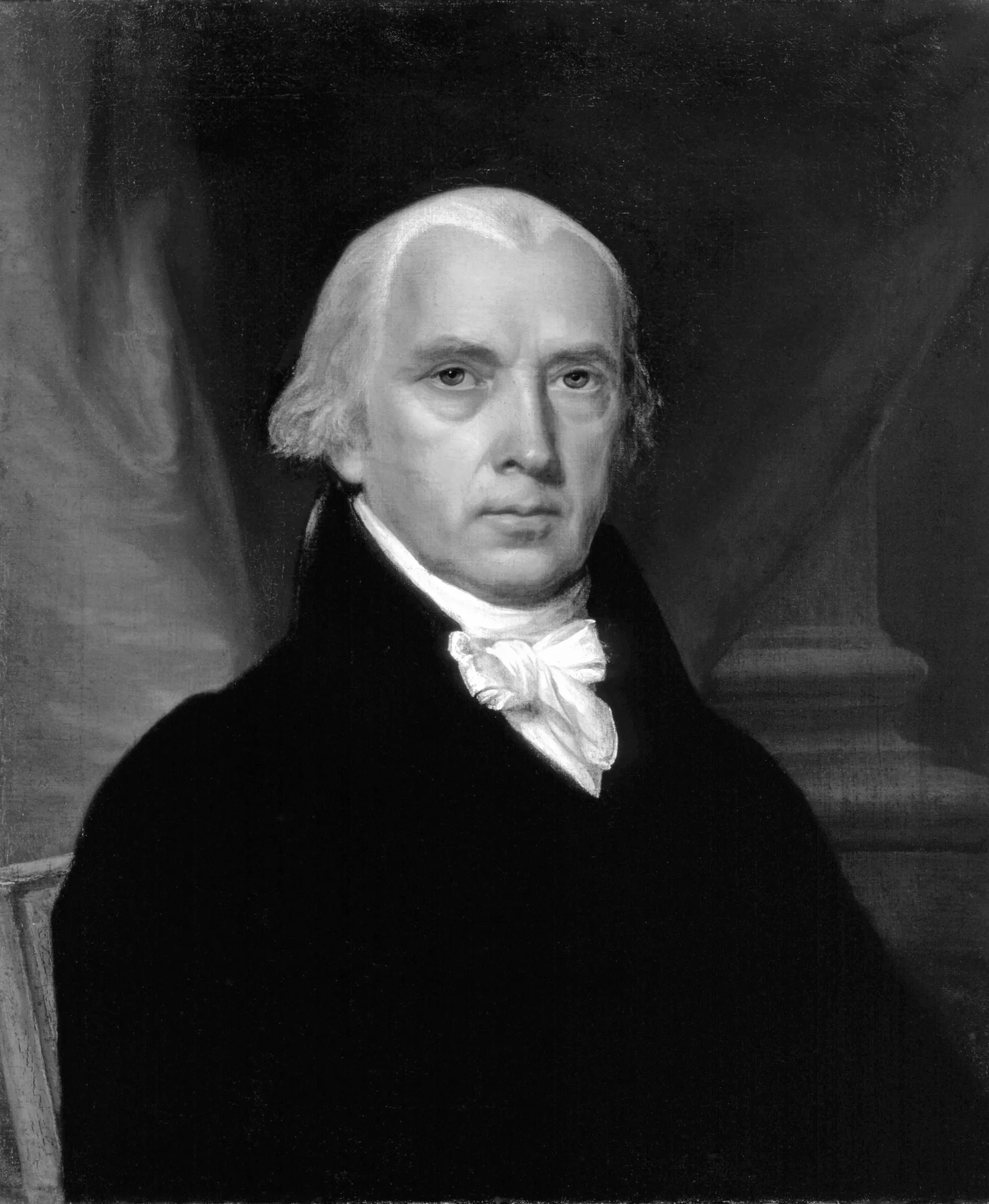
James Madison
JAMES MADISON · 1751–1836

James Madison — The Architect of Separation

Madison was the primary author of the Constitution and the Bill of Rights. The First Amendment was his deliberate gift to future generations. He had watched religious institutions in Virginia persecute dissenters and was determined that no such tyranny would take root in the new republic.

"The purpose of separation of church and state is to keep forever from these shores the ceaseless strife that has soaked the soil of Europe in blood for centuries."

The wall Madison built was not anti-religious — it was pro-liberty. It was the institutional expression of everything Paine had argued. Madison also enslaved hundreds of people and, like Jefferson, failed to apply his own principles to the most urgent moral question of his time.
Thomas Edison

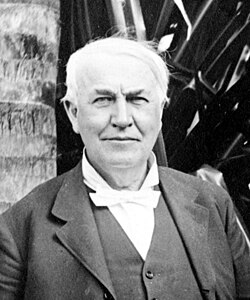
Thomas Edison
THOMAS EDISON · 1847–1931

Edison — The Boy Who Found Paine

At the age of 13, Thomas Edison opened a book from his father's library and felt what he would later describe as a "flash of enlightenment." The book was Thomas Paine's collected works. That moment — a boy alone with a book, his mind suddenly alight — is one of the most quietly profound scenes in American intellectual history.

"I can still remember the flash of enlightenment which shone from his pages. It was a revelation, indeed, to encounter his views on political and religious matters, so different from the views of many people around us."
— Thomas Edison, 1925

Edison went on to become the most prolific inventor in American history — 1,093 patents, the phonograph, the light bulb, motion pictures. Like Paine before him, he trusted no institution to tell him what was true. He trusted his own mind, his own experiments, his own reason. And like Paine, he was diminished for it.

"There is no expedient to which a man will not resort to avoid the real labor of thinking."

— Sir Joshua Reynolds · Displayed on Edison's desk at Menlo Park

Edison on Paine — The Full Essay · June 7, 1925

Tom Paine has almost no influence on present-day thinking in the United States because he is unknown to the average citizen. Perhaps I might say right here that this is a national loss and a deplorable lack of understanding concerning the man who first proposed and first wrote those impressive words, 'the United States of America.' But it is hardly strange. Paine's teachings have been debarred from schools everywhere and his views of life misrepresented until his memory is hidden in shadows, or he is looked upon as of unsound mind.

We never had a sounder intelligence in this Republic. He was the equal of Washington in making American liberty possible. Where Washington performed, Paine devised and wrote. The deeds of one in the field were matched by the deeds of the other with his pen. Washington himself appreciated Paine at his true worth. Franklin knew him for a great patriot and clear thinker. He was a friend and confidant of Jefferson, and the two must often have debated the academic and practical phases of liberty.

I consider Paine our greatest political thinker. As we have not advanced, and perhaps never shall advance, beyond the Declaration and Constitution, so Paine has had no successors who extended his principles. Although the present generation knows little of Paine's writings, and although he has almost no influence upon contemporary thought, Americans of the future will justly appraise his work. I am certain of it. Truth is governed by natural laws and cannot be denied. Paine spoke truth with a peculiarly clear and forceful ring. Therefore time must balance the scales.

I have always been interested in this man. My father had a set of Tom Paine's books on the shelf at home. I must have opened the covers about the time I was 13. And I can still remember the flash of enlightenment which shone from his pages. It was a revelation, indeed, to encounter his views on political and religious matters, so different from the views of many people around us. Of course I did not understand him very well, but his sincerity and ardor made an impression upon me that nothing has ever served to lessen.

Paine has been called an atheist, but atheist he was not. Paine believed in a supreme intelligence, as representing the idea which other men often express by the name of deity. His Bible was the open face of nature, the broad skies, the green hills. He disbelieved the ancient myths and miracles taught by established creeds. But the attacks on those creeds have served to darken his memory, casting a shadow across the closing years of his life.

The memory of Tom Paine will outlive all this. No man who helped to lay the foundations of our liberty — who stepped forth as the champion of so difficult a cause — can be permanently obscured by such attacks. Tom Paine should be read by his countrymen. I commend his fame to their hands.

Abraham Lincoln

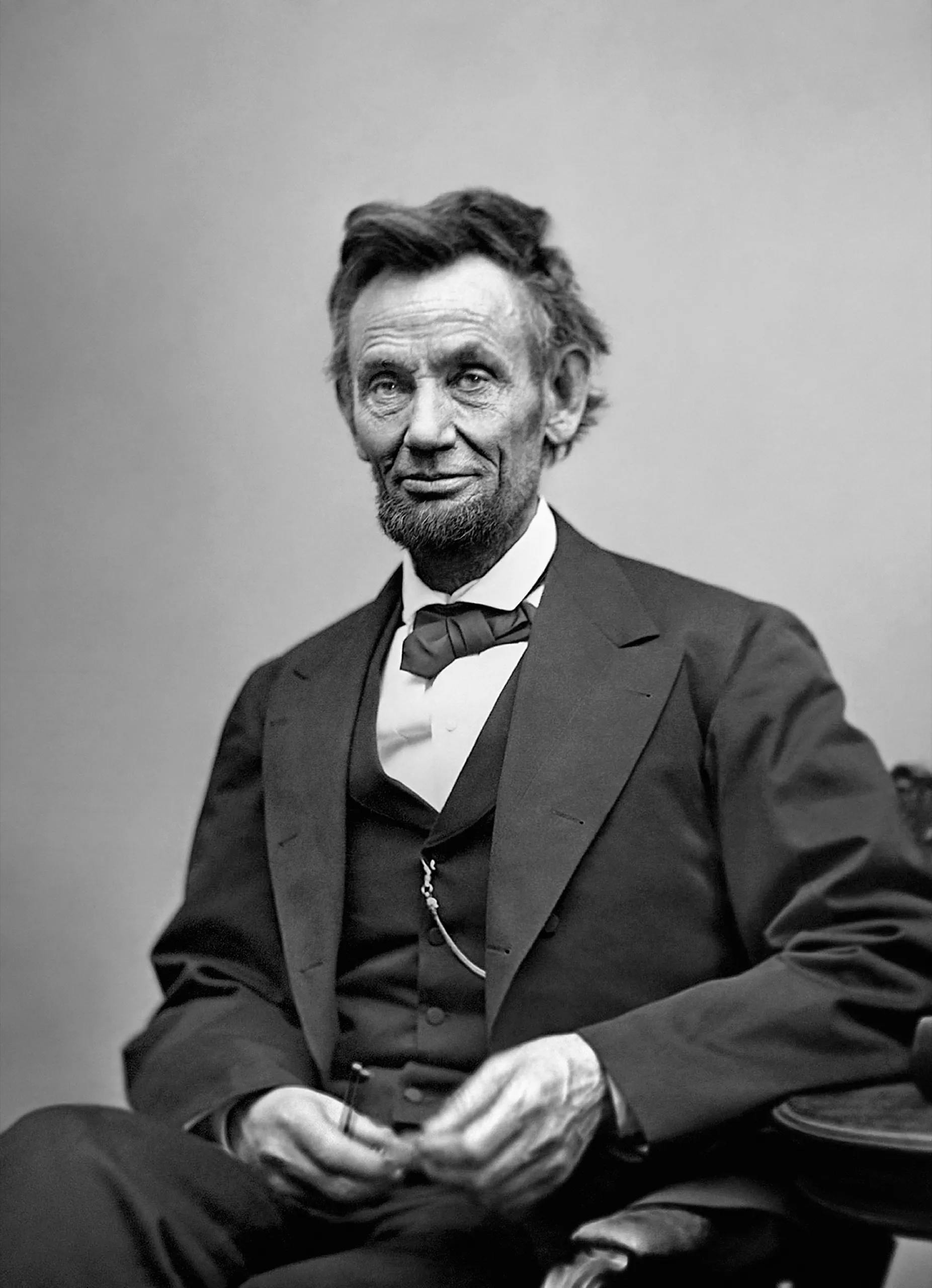
Abraham Lincoln
ABRAHAM LINCOLN · 1809–1865

Lincoln — A Spiritual Man Without a Church

Abraham Lincoln never joined a church. Not once. In all his years — from frontier Illinois to the White House — he never became a member of any denomination, never took communion, never submitted to any religious authority. Yet he spoke about God, providence, and the mystery of existence with more depth and honesty than almost any president before or since.

"I never tired of reading Paine."
— Abraham Lincoln

Lincoln's God was not the God of any creed. It was a God of mystery and providence — one you approached with humility and reason, not with certainty and doctrine. And unlike Jefferson and Washington, Lincoln put his principles into action on slavery. He paid for it with his life.

"When I do good, I feel good. When I do bad, I feel bad. That's my religion."

Twain & Whitman

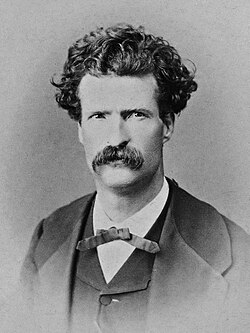
Mark Twain
MARK TWAIN · 1835–1910

Mark Twain — The Skeptic's Skeptic

Mark Twain was perhaps the sharpest, funniest, and most devastating critic of religious hypocrisy in American literary history. His skepticism was alive with moral outrage at the gap between what institutions preached and what they practiced.

"Faith is believing what you know ain't so."

Twain's later writings — especially Letters from the Earth and The Mysterious Stranger — are among the most ferocious attacks on institutional religion ever written. He held back publishing them during his lifetime, knowing the price he would pay. His real beliefs, like Paine's, have been softened and sanitized by the very culture he spent his life skewering.

"The church is always trying to get other people to reform; it might not be a bad idea to reform itself a little, by way of example."
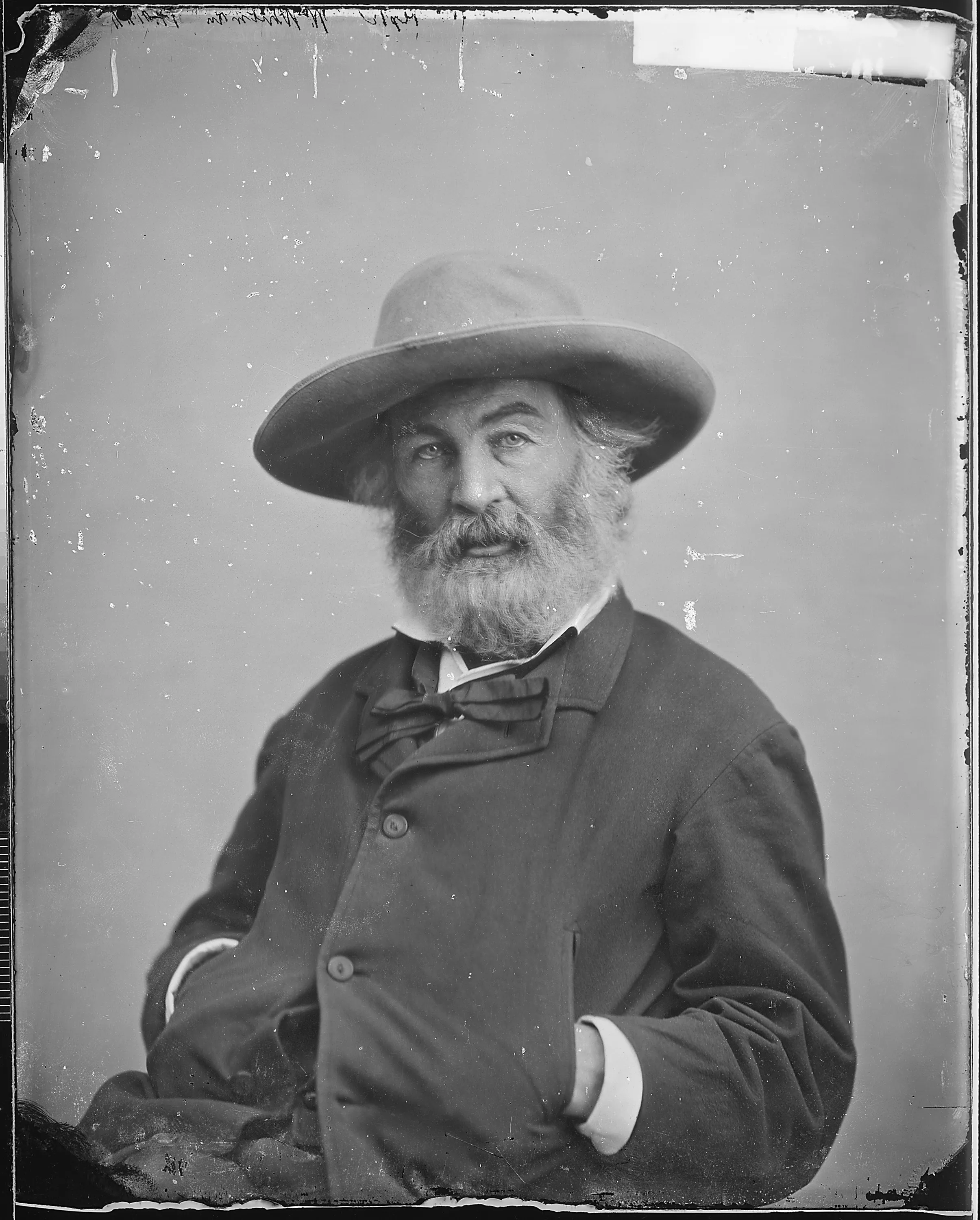
Walt Whitman
WALT WHITMAN · 1819–1892

Walt Whitman — The Mystic of Nature

Where Twain attacked with wit, Whitman embraced with wonder. His spirituality was vast, pantheistic, and deeply connected to the natural world — every blade of grass a miracle, every human body a universe, every soul an equal expression of the divine. He belonged to no church because no church was large enough to contain what he felt.

"I believe a leaf of grass is no less than the journey-work of the stars."

Whitman's Leaves of Grass is one of the great spiritual documents of American literature — not in spite of its rejection of orthodox religion, but because of it. His God was immanent in all things, accessible to all people, requiring no intermediary, no doctrine, no institution.

"I am large, I contain multitudes."